11.11.2005

Out in the Sticks on SuprGlu


SuprGlu is one of the coolest things I have come across in a while! You can set it up to receive all kinds of RSS feeds in one place. My page shows my RSS feeds from my blog, my playlist, my 43 things, my 43 places, my All Consuming, my del.icio.us links, and my flickr photos.

The style is that of a blog. Check it out and try your own!

11.10.2005

Expletive Undeleted: Dropping the F-bomb in Church from the Leadership Blog


Here's a great case study (though I doubt I'd ever be faced with this dilemma in my two churches).
"A few days before Christmas, pastor Mike Sares got a call from his associate. “Mike,” he said, “Mary Kate Makkai has agreed to read one of her poems at the Christmas Eve service. It’s really, really good, but it’s got the F-bomb in it several times, and I just thought I should check with you about that.”"

Check out the entire article here.

Warfare worldview evidence: Copts' Night of Terror


"Copts will long remember Friday, October 21, as a night of terror, flame, and violence in Alexandria. Late that evening, thousands of rioting Muslims targeted three poorly protected Protestant congregations and an Orthodox church in the Muharram Bey section of Alexandria. Muslims were venting their anger over a video of a Christian play, produced at an Orthodox church. Muslims allege the video defamed Islam.

Days after the violence, I visited Christian congregations all over Alexandria and found everyday believers in a state of anxiety and shock over the attacks. Muslim-Christian violence, they told me, was something that happened in poor areas of Cairo or rural Upper Egypt, not Alexandria."

Wired News: Eat, Sleep, Work, Consume, Die


Ted the Gerbil
Originally uploaded by meke.


This is a powerful article that speaks much truth. Consider this great quote:
"My expectations have been raised to this ridiculous level by technology running amok through my heretofore-bucolic existence. I used to be a laid-back guy. Now I'm impatient. I chafe. I get irritable when my gratification isn't instantaneous. And it isn't just me. The whole world is bitchier these days.

I'm old enough to remember when waiting a few days for a letter to arrive was standard operating procedure, even in the bare-knuckles business world. I recall a time without answering machines, when you just had to keep calling back on your rotary phone until someone picked up. (Which had the unintended benefit of allowing you to reconsider whether the original call was even worth making in the first place.) The world moved at a more leisurely pace and, humanistically speaking, we were all the better for it.

Just because technology makes it possible for us to work 10 times faster than we used to doesn't mean we should do it. The body may be able to withstand the strain -- for a while -- but the spirit isn't meant to flail away uselessly on the commercial gerbil wheel."

The author, Tony Long is copy chief of Wired News. Maybe you thought you were reading an excerpt from the Constructive Curmudgeon but alas this is Wired News making this commentary all the more powerful.
For discussion: How do you feel about work, technology, and consumerism? Is your body keeping pace but your soul falling behind?

Good Morning, Evangelicals! - Christianity Today Magazine

The following quote describes an interesting approach to church and church programs. This sounds a lot like Frank Tillapaugh's ideas as communicated in his book Calling.
"Haggard is so enthusiastic about free-market economics that he applies it to church. New Life offers hundreds of small-group activities, everything from 'Growing in God as a Wife and Mother' to 'Holy Hip-Hop Jam Session.' How do the pastors decide what to include? They don't. If someone comes up with an idea, and that person passes a basic screening, the church will help promote the group. New Life organizes the marketplace but leaves the details to the people, who write their own programs."

Sounds like a great idea to me! It would definitely keep churches from uttering those seven last words of a church: "We've never done it that way before!"

11.09.2005

Good Morning, Evangelicals! - Christianity Today Magazine


Here's another excerpt from the Christianity Today article on Ted Haggard. At the end of this quote is a great line:
"Prominently displayed are books by culture warriors like Pat Robertson and Phyllis Schlafly, but also books by public-policy experts, historians, and analysts of secular culture like Dinesh D'Souza, Samuel Huntington, Bernard Lewis, Newt Gingrich, Thomas Friedman, and David Gergen. Yet we are in a church bookstore, where nearly all the titles are inspirational. Haggard is telling his congregation, Think big. Think about the whole world. The Bible does not tell you everything you need to know."

What is your experience in this area? Do you agree with this idea?

11.08.2005

Good Morning, Evangelicals! - Christianity Today Magazine


Here's an interesting article on Ted Haggard teh president of the National Association of Evangelicals. The following quote includes Haggard's definition of an evangelical:
'When I became president of the NAE [National Association of Evangelicals],' Haggard tells the Inquirer's Nussbaum, 'the talk was about doing away with the term evangelical. Evangelicalism was morphing and changing so much that people were wondering if the term applied. The first decision I made as president was to start using the term prolifically and defining it simply. I define an evangelical as a person who believes Jesus Christ is the Son of God, that the Bible is the Word of God, and that you must be born again.'

So what do you think of his definition? Do you agree or disagree? Are you an evangelical according to this definition?

11.03.2005

"All things to all men" or "Be ye separate"? - Christian History


Here's another great article from Chris Armstrong encouraging all of us to read more great church history biographies. I have included a passage from his article that I found particularly interesting. Please read it and let me know what you think. Specifically, do you think his assessment of the Emergents (as he calls them) is correct? Do you believe Emergents agree with both the peculiar people thinking and the intrepid translator thinking? Here's the quote:
"Christian churches, say the Emergents, need to look like Christian churches—down to the crosses, candles, and even (if necessary), the stained glass; and they need to teach like Christian churches—including a hearty dose of good 'vintage' doctrine.

So our Emergent friends would likely agree with both parties in this dispute: the church needs both to find new ways of translating the gospel to directly address the questions of the day (per Niebuhr), and to refuse to buckle to secular culture by knocking the sharp edges off of Jesus' radical kingdom message and pretending that 'we Christians are really just like the rest of you folks!' (per Hauerwas)."

Exploring a Parallel Universe - Christianity Today Magazine


In this article Philip Yancey asks "why does the word 'evangelical' threaten so many people in our culture." His thoughts, especially his closing paragraph should be taken to heart by us all! Here's the opening to get you started:
"For almost ten years, I have participated in a book group comprising people who attended the University of Chicago. Mostly we read current novels, with a preference for those authors (Philip Roth, Saul Bellow, J. M. Coetzee) who have a connection with the school. The group includes a Marxist-leaning professor of philosophy, a childhood-development specialist, a pharmaceutical researcher, a neurologist, and an attorney.

I marvel in our meetings at how the same book can evoke radically different responses."

11.01.2005

Does Electrocution Happen for a Reason? - Christianity Today Magazine


Here is an excerpt from Kyle Lake's book to ponder at the time of his tragic death.
"We'll never know what Kyle Lake would have said about the reason why, when he reached for a microphone as he was performing a baptism in front of 800 people, he was fatally electrocuted. But his explanation of a verse that may be infuriating to hear right now to some of those he left behind—Romans 8:28—may at least hint at his answer. It is reprinted, with the publisher's permission, an excerpt from Understanding God's Will: How to Hack the Equation Without Formulas (Relevant, 2004)."

Warfare worldview evidence: Christian Teens Beheaded in Indonesia


Ever since I became familiar with Greg Boyd and his books, especially God at War, I have been wrestling with my reformed roots, which emphasize the sovereignty of God and understand God's sovereignty and omnipotence to mean total, absolute meticulous control. The understanding is that God has a "blueprint" for history that he is following. But does the evidence in the world around us support this view? Or does the evidence suggest a warfare worldview as argued for by Greg Boyd? To help me and perhaps you wrestle through this issue, I've decided to start blogging evidence for a warfare worldview. I'd love to hear your thoughts on this issue as we seek to sort this out. Here's the first post:
In what one Indonesian human rights activist describes as the latest attack in an ongoing terror campaign against Christians of Central Sulawesi, Indonesia, three teenage girls en route to school through a cocoa plantation were beheaded Saturday morning, apparently by Muslims.

Theresia Murangke, 14, and Ida Lambuaga and Alfina Yarni Sambue, both 15, were attacked one mile from Sayo village near the town of Poso, reports Indonesian Christian journalist Ibrahim Buaya, who formerly lived in this volatile region of Indonesia. A fourth girl, Noviana Malewa, 14, escaped from her attackers with machete wounds to her face. Buaya reported that she is in Poso General Hospital under heavy guard. The Associated Press reported that Noviana told police the six attackers wore black shirts.

10.31.2005

1,000 Attend Service For Pastor Electrocuted During Baptism


This is a terrible tragedy. Kyle Lake will be missed. May he rest in peace.

A Halloween Solution - Christianity Today Magazine


Halloween...probably the most controversial of holidays in America. Here's a fun, short article dealing with the day.

10.26.2005

Emerging Solutions—and Problems - Christianity Today Magazine


Sorry for the long delay since I last posted! I've been rather busy with hospital visitation, funerals, leadership issues, denominational meetings, alt.worship services, some big time spiritual warfare, and my growing family. Here's an article that caught my eye. Perhaps you have followed the flap over Carson's book Becoming Conversant with the Emerging Church. If not, this article will introduce you to some of the issues. I feel I often straddle the fence on the issue of the emerging church. I haven't jumped in with both feet, but the preaching of Tim Keel and Rob Bell really resonants with me and much of what I have read by McLaren and others does as well. Yet I find myself torn. I also find much that doesn't sit well with me. I think that's why the following quote from the article sums up my feelings as well:
Rather than becoming antagonists, Carson and McLaren should continue in dialogue, so the academic theologian and the missional practitioner might be mutually enriched and refocused.

10.21.2005

The 100 Minute Bible


The 100-Minute Bible is primarily intended for people who have an interest in Christianity but not the time (nor tenacity!) to read the whole Bible

This concept is really bugging me! What has been determined to be the "core" of the Bible? Can you really pick out the principle stories? And who says which stories are the principle stories?

I have found that people make time for the things they are interested in. If you are interested in fly fishing, quilting, mathematics, philosophy, etc. there are no shortcuts to growing in your understanding of these things. You have to put effort forth. And people do, if they are interested. Why should the Bible be any different? I think the 100 Minute Bible is sending the wrong message! What do you think? Are you as bugged by this as me, or do I need to just chill out?

Old Words, Vibrant Faith - Christianity Today Magazine


Check out this interview with Charlie Lowell of Jars of Clay taking about the band's CD, Redemption Songs. I appreciate his thoughts and his sentiment concerning the hymns!
These songs have been in the band for years. Some of them we wrote for the record, like 'God Will Lift Up Your Head' and 'Jesus, I Lift My Eyes.' Some of them we have been singing backstage in our dressing room or at church for years. But it's new to our audience. It's something we haven't really talked about. There was this sort of modern worship thing, and we felt like black sheep. But times came around and we felt like this is really valuable and could be something that the church even needs right now. Maybe the church needs some of these songs that take us back to our roots and foundation.

Why? - Christianity Today Magazine


Here's a short article giving several different answers to the question of why concerning hurricane Katrina and Rita.
The debate over the meaning of the hurricane started when it became clear that federal, state, and local officials were having trouble responding to the disaster.

Democrats said the hurricane revealed inept leadership and bias against the poor. Republicans said government failures showed that the private sector could do a better job.

Muslim militants said it was Allah's judgment. Louis Farrakhan trumpeted a Black Muslim view that Katrina was judgment for the Iraq War. Ovadia Yosef, a leading Orthodox Jewish rabbi in Israel, said the hurricane was punishment for U.S. leaders forcing Israel out of the Gaza Strip.

10.19.2005

Book Review: 90 Minutes in Heaven by Don Piper


Have you ever wondered what life after death is like? Do books about near death experiences interest you? Then you may enjoy this book. Don Piper shares his incredible story of death, pain, and life in his book 90 Minutes in Heaven.

Piper died in a terrible car accident on a rural Texas highway. He was dead for 90 minutes. During that time, he went to heaven but came back to life on earth after a pastor prayed for him.

Repeatedly, Piper says that words cannot possibly describe what heaven is like. Piper is greeted by deceased friends and family, sees the pearly gates and golden streets, and hears wonderful music.

After describing his brief glimpse of heaven, the rest of the book recounts his trying struggle to recover from his horrific injuries. The intense pain and knowledge that he will never again be normal lead Piper to despair, depression, and frustration. Fortunately, God places several people in Piper’s life who help him through his depression and despair. Piper begins to share his experience with others and finds God working through his story.

Overall it is a good book. His description of the car accident, heaven and the painful recovery are powerful. Many of the lessons he learned through this ordeal are very helpful. One such lesson for me was allowing people to minister to me because it enables them to live out their calling.

But several things bothered me in the book. One was the author’s repeated attempts at interpreting what he experienced in terms of his theological presuppositions. Most obvious were Piper’s repeated comments concerning the absence of time in heaven and yet he experienced sequence. He met one relative first, then another, then a friend, and so on. He did this first, and this next, and so on. He heard this song, which had these notes, played in this sequence, and so on. If he experienced obvious sequence in heaven, which would indicate the passage of time, why doesn’t the author reinterpret his theology in light of his new experience?

Another frustrating aspect of the book was the overall weakness I see in many evangelical Christians (myself included!) as exemplified in Piper. Piper is a Baptist minister and I kept asking myself what this book would be like if a minister with a more contemplative, sacramental worldview had experienced this same trial. I commend Piper for his openness and allowing himself to be vulnerable. I commend Piper for allowing us to see him when he was not at his best. I commend Piper for writing a book that doesn’t present himself as the most likeable guy. But overall, I feel he reflects so many Christians today who do not have a deep, contemplative relationship with God and who lack a theology that includes suffering.

Don’t get me wrong. I would not have handled his situation any better than he did. But I do believe that his analytical approach to this ordeal by seeking to find answers is typical of many evangelical Christians today. We rarely seize moments that will allow us to contemplate the sufferings of Christ (and obviously none of us want to do this!). To me some of his reflections highlight some of the weaknesses of a purely analytical, rational approach to our relationship with God. It feels to me, based on the teachings of Jesus and Paul, that we should have a far better perspective on suffering and pain than we typically do.

Let me encourage you to read this book. And let me encourage you by reading this book to place yourself in Piper’s place and develop a powerful, thoughtful theology of suffering.

Thanks to Paige Harvey of PS Media Relations for sending me a copy of this book to review.

10.08.2005

Out in the sticks extreme makeover coming (I hope!)


Outinthesticksoct
Originally uploaded by hawkenstein.
I am growing tried of the look of my blog. I am currently trying to rework it and learn a thing or two along the way. Please be patient if things go completely crazy!

These changes will coincide with some huge changes going on at the churches I pastor. I plan to share about all of that in the near future.

Grace and peace,
Steve

10.07.2005

Book Review: Calling by Frank Tillapaugh and Richard Hurst


I have been familiar with Frank Tillapaugh and his work at Bear Valley Church in Southeast Denver for quite sometime. Though he has not been the pastor there for over 2 decades now, his legacy there is widely felt. I worked as the youth pastor at Centennial Community Church which was birthed out of Bear Valley as a reclamation project which he briefly mentions at the end of the book.

Frank's work has been profound in the Denver area. And yet his work is really a result of creating what he calls an "open system" which allows people in the church to pursue their God given calling. He truly believes that the Bible really means it when it says that, we are all ministers, that all have been given a gift by the Holy Spirit to use in ministry, and that all beleivers are a royal priesthood. He really believes a pastor is "to prepare God's people for works of service" (Ephesians 4:12).

This belief has caused Frank to take helping people live their callings seriously. As a result the ministries below have come into existence:

Denver Street School (check out the history page)
Mile High Ministries (check out the About Us page
Inner City Health Center
Whiz Kids Tutoring
Project Cure
Alternatives Pregnancy Center

...and many others.

Wow! Isn't it great to see the power of calling? Just think of the impact these ministries have had and continue to have on so many people in Denver! And few people relize that these ministries owe there existence to followers of Jesus being faithful to their calling...to the want-to that God placed inside their hearts.

If you want to get a taste for how this might be accomplished in your church (though it is not a how-to manual) read Calling. I highly recommend this book. If used copies of the book are not available from Amazon, the book is available from Frank's organization Dreamtime listed on this product page.

10.05.2005

Emergents, Meet Saints! - Christian History


Here's a great article on studying church history to inform our current wrestlings with church and culture. Here's a great quote from the article and I agree with the author.
The Emergents seem to me to have it right: No single program or rulebook can possibly speak to the hearts of this diversely gifted, diversely perceptive, and diversely wounded young generation who yearn for spiritual fulfillment yet deeply distrust 'organized religion.' We need to reassess—to find new models of creative ministries.

What to do in such a time?

This is a time for stories. Maybe stories from history, 'straight up'—carefully researched and narrated by the scholars who have given their lives to unearthing and interpreting historical evidence and shaping the clearest, most accurate and unbiased story they can out of the shards and shadows of the past. Maybe edifying allegories, plays, and tales of various kinds.

And maybe, too, the life stories of those 'dead Christians' who translated the Gospel for their own generations—forcing the church in their times to shake itself out of deep ruts and see the world in new, challenging lights. Maybe these lives can teach us something about how to translate the Gospel for the lost of our own new patchwork, post-Christian generation.

I like this idea of looking to the past for ideas for future new creative models of ministry. What are your thoughts? Is there anything we can learn from the past to help the church move forward into the future?

10.04.2005

The Power of Media: Interview with Micheal Flaherty


Here's an interesting interview with Micheal Flaherty, the president and co-founder of Walden Media which is bringing The Lion, The Witch, and The Wardrobe to the big screen this December. I find the following quote from the interview particularly interesting:
I was thoroughly depressed after Columbine, but I started to get encouraged when I read about how strong some of the young victims' faith was, particularly Cassie Bernall and Rachel Scott. One thing I found interesting was that these kids loved films. Cassie's favorite movie was Braveheart, and I think Rachel's was as well. In contrast, the killers' favorite films were reportedly things like Natural Born Killers.

I decided I would like to find a way to make more great, inspiring films that can lift people up and encourage them, particularly for this age group. So I called my old roommate from college, Cary Granat, who at the time was president of Dimension Films. Cary also wanted to do something more inspirational for the family. So that was the origin of it, acknowledging that media really does have a role in influencing hearts and minds. And finding a way, rather than just to curse the darkness, to light a few candles and get more great films out there.

Particularly interesting to me is Flaherty's acknowledgement that the "media really does have a role in influencing heart and minds." It is refreshing to hear someone in the media say this. It seems to me that whenever concerns are voiced about the media and how it depicts violence, sexuality, religion, etc...that those voices are drowned out by others crying for free speech and seeking to argue that the media does very little to shape people's hearts and minds.

Watching my children grow has only made me more aware of the power of the media to shape hearts and minds. Last night we were reading from Laura and Mr. Edwards a Little House on the Prairie chapter book. In this book, Laura Ingalls describes winter on the prairie and how the girls passed the time. Listen to her description:
Now that winter had arrived on the Kansas prairie, the days were short and very cold. The wind howled and a hard rain fell. But there was no snow. Laura and Mary stayed inside, close by the fire. They listened to the wind and the wet sound of rain as they sewed on their quilts and cut paper dolls from scraps of wrapping paper.

Can you imagine kids today being content doing these things? I know my kids wouldn't be! They have been so shaped by the media that they believe they must always be entertained. Commercials on TV are particularly powerful to a 5 year old! I can sit and watch as their little eyes grow bigger and bigger as their excitement concerning a toy or a snack food increases. Then when the commercial is over they turn to me and say, "I want that! Can we go get that now? Can I have that for my birthday? I want that for Christmas!" The power of the media to shape the heart and mind. I believe it's very real.

What do you think?

9.28.2005

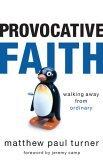
Book Review: Provocative Faith by Matthew Paul Turner


Every once in a while you read a book that you needed to read. I needed to read Provocative Faith at this time. From the first page of chapter 1 you know this is not your run of the mill Christian answer book. Right there, in black and white, at the bottom of page 31, Matthew boldly confesses his sin, his struggle with porn. His authenticity and transparency are disarming...and so refreshing.

This book relates Matthew's journey from ordinary, mundane Christian faith to passionate, provocative faith. Matthew challenges the reader to move from the "same ole same ole" faith to a faith that is "centered, stimulating, controversial, challenging, powerful, miraculous, vulnerable, frustrating, and fearful--in a word, provocative" (p. 21).

This book is full of great reminders and insights for all disciples. I am currently examing my call in light of several things that are happening at my two churches. So far, God has been silent. I'm learning to wait patiently as Matthew describes in his chapter "the burning bush isn't for everyone." I'm taking inventory, seeking to "participate in God's dream for (me)" (chapter 10). Is this call where God wants me? Matthew says it well,
If God has given you a dream, and chances are he has, it is imperative that you seek his will on how to make it a reality. Never lose focus on the truth that the dream is a blessing and a gift from Jesus. But in the end, don't you want to hear, "Well done, good and faithful servant"? I want to hear Jesus say to me, "Matthew, you took my dream in you and made it what I wanted it to be; good job!"

I too want to hear those words.

Matthew also reminded me of one way to tune into Jesus and his dream and will for me: meditation.
If you get one thing from this book, let it be this: meditation on Jesus will change your spiritual life. It will rejuvenate your faith like nothing else you will ever experience. More than a great sermon, more than listening to a radio teaching, more than reading this book, meditation on Christ--what he did, who he is, and what he wants of you--will give your life focus, and it will make your faith provocative. And you will begin to know him like never before.

I needed this book at this time. I needed the reminder to be authentic, transparent, and bold. I needed to be reminded to wait on God, that he is good, that he has a dream for me to achieve which he has uniquely gifted me for, and that he will share with me what it is if I'll just sit still, shut up, and listen.

Thanks to Paige Harvey of PS Media Relations for sending me a copy of this book to review! Paige, your sending me this book really ministered to me! Grace and peace!

9.27.2005

To Conserve Gas, President Calls for Less Driving - New York Times


A qoute from the article:
Mr. Bush's comments, while similar to remarks he made shortly after the disruption from Hurricane Katrina pushed gasoline prices sharply higher, were particularly notable because the administration has long emphasized new production over conservation. It has also opted not to impose higher mileage standards on automakers.

In 2001, Vice President Dick Cheney said, 'Conservation may be a sign of personal virtue, but it cannot be the basis of a sound energy policy.' Also that year, Ari Fleischer, then Mr. Bush's press secretary, responded to a question about reducing American energy consumption by saying 'that's a big no.'

'The president believes that it's an American way of life,' Mr. Fleischer said.

It finally appears that conservation is on the President's radar! Yet, what will truly cause people to conserve is the expense and not a plea from the government. Could it be that the American way of life is wrong? What do you think?

9.26.2005

Jesus Isn't Cool: Challenging Youth Ministry


Here is a fantastic article for all youth ministers to read! I know as a former youth minister I really struggled with the concepts in this article.
Religion may help teens find a sense of purpose, stay focused on schoolwork, avoid drugs, drive responsibly, and so on. These are good and important things and they are all part of the 'religious package,' but they are not the point. They are like the paper bag you get for free if you buy the groceries.

Sadly, so much of our ministry to youth (and adults!) can be summed up in trite t-shirt slogans. How far does the t-shirt slogan religion take a person?
After a particularly difficult night, I shared my struggles with a young woman interested in becoming a youth minister. "I'm not sure you want to get into this," I said. "There are other things you could do." She sat in a moment of stunned silence. Then she told me about her college years.

"My faith was no match for college," she said. "Youth group was fun, but no one taught me anything." She recalled those years marked by drugs, broken relationships, an eating disorder, sex, pregnancy and eventually abortion. Finally, with tear-filled eyes, she said, "Don't you see? If I had grown up in a youth group like yours, I would have had a fighting chance."

Christianity boiled down to a t-shirt slogan, no matter how cool or stylish will ever give our youth a fighting chance.

9.23.2005

Suddenly Single


This article reminded me of our friend Mel West (she's wearing the cowboy hat in the picture) who is walking the suddenly single road after her husband Ken died last year following a long, painful battle with cancer. We love you Mel and are praying for you!
'In most cases you’re dealing with the loss of someone close,' Grissom says. And whether or not it’s expected, the person is still going through a deep grieving process.

He says that when there’s a death, 'there’s an enormous amount of support around the funeral and maybe for a couple of weeks afterward, but then everyone around starts to resume their lives in a normal fashion; yet the person in grief is still trying to rebuild his or her life.'

LeadershipJournal.net - P*rn Sund*y


October 9 is National Porn Sunday. Below are some sobering statistics:
Every day, nearly 40 million people visit one or more of 4.2 million porn sites the internet. At $6.2 billion yearly, porn revenue exceeds the combined revenues of ABC, NBC, and CBS. According to statistics at XXXchurch.com, nearly 50 percent of Christians say that pornography is a major problem in the home.

Check out these links for help in dealing with addiction to pornography:

Porn Sunday
XXXChurch.com
Help for Porn Addicts
Covenant Eyes

9.20.2005

Book Review: Intercessory Prayer: How God Can Use Your Prayers to Move Heaven and Earth


I really wanted to like this book! This book was handed to me by a true prayer warrior, a woman in one of my churches that really spends serious time in prayer. I had great hopes for this book because of this.

However, I am really disappointed with this book. I found Sheets' style to be inauthentic and "preachy." It didn't feel real or vulnerable to me. Nearly every anecdote that is shared about prayer is miraculous and incredible in some way. Never is there a serious wrestling with unanswered prayer. Overall, if your prayers go unanswered it feels that Sheets' answer for you is that you are doing it wrong.

Sheets' also demonstrates an overall ignorance of biblical Greek and Hebrew. The only scholarly works cited are lexicons and concordances and not a single biblical commentary is mentioned for any passage he discusses. Sheets' does know his way around a Greek or Hebrew lexicon and Webster's Dictionary. Unfortunately this leads him down the path of many Exegetical Fallacies.

The most common fallacy of Sheets' is defined by D.A. Carson as "unwarranted adoption of an expanded semantic field." The following is what Carson means:

The fallacy in this instance lies in the supposition that the meaning of a word in a specific context is much broader than the context itself allows and may bring with it the word's entire semantic range. Exegetical Fallacies, p. 60.
Sheets' regularly brings to bear the word's entire semantic range even if the context does not allow this.

Another fallacy Sheets' falls into is "semantic anachronism".
This fallacy occurs when a late use of a word is read back into earlier literature. At the simplest level, it occurs within the same language, as when the Greek early church fathers use a word in a manner not demonstrably envisaged by the New Testament writers...But the problem has a second face when we also add a change of language. Our word dynamite is etymologically derived from dynamis (power, or even miracle). I do not know how many times I have heard preachers offer some such rendering of Romans 1:16 as this: "I am not ashamed of the gospel, for it is the dynamite of God unto salvation for everyone who believes" -- often with a knowing tilt of the head, as if something profound or even esoteric has been uttered. This is not just the old root fallacy revisited. It is worse: it is an appeal to a kind of reverse etymology, the root fallacy compounded by anachronism. Did Paul think of dynamite when he penned this word? Exegetical Fallacies, pp. 33-34

He probably didn't, seeing that dynamite had not yet been invented!
But here is another pastor committing this same fallacy! Sheets on pages 169-170 says,
On the other hand, we have weapons that are "divinely powerful" to pull down strongholds, if we would only realize it...The word "powerful" is dunatos and is actually one of the New Testament words for a miracle...And, of course, this is the Greek word from which we get the word dynamite. This stuff is explosive!

This dynamite is explosive for the "destruction of fortresses"...

Sadly and obviously these are not the word pictures the New Testament writers had in mind as they had no experience or understanding of dynamite.

I'll let Carson have the last word, as I believe many popular level books consumed by Christians are full of these "word-study fallacies":
But as important as word studies are, it is very doubtful if profound understanding of any text or of any theme is really possible by word studies alone.

Perhaps the principal reason why word studies constitute a particularly rich source for exegetical fallacies is that many preachers and Bible teachers know Greek only well enough to use concordances, or perhaps a little more. There is little feel for Greek as a language; and so there is a temptation to display what has been learned in study, which as often as not is a great deal of lexical information without the restraining influence of context. The solution, of course, is to learn more Greek, not less, and to gain at least a rudimentary knowledge of linguistics. Exegetical Fallacies, p. 64

9.19.2005

resettle.org


Here's another group trying to help the victims of hurricane Katrina.
A realistic and holistic solution for the victims of hurricane Katrina

Our Mission: To mobilize every community of 10,000 people within 1000 miles of the gulf coast to provide for the temporary resettlement of up to 10 families.

I have been reading about the aftermath of hurricane Katrina today online. This article at the Ooze by Jim Henderson is a difficult one for me to process. Yes, I believe that institutional racism exists and keeps people down. Yes, it is possible that the federal government's slow response was in part due to racism in our nation. But I struggle with the desire to reduce this catastrophe to one cause, namely racism.

One of the TV news shows the other night discussed other very possible catastrophes. These catastrophes included an influenza pandemic, a dirty bomb being denoted in New York city, and an earthquake in San Francisco. The overwhelming reality for all of these potential crises is that we are not prepared. We are not the masters of our world that we like to think we are. And each of these crises are color blind.

If any one of these other catastrophes hit us (actually more like when, since all experts agree it is only a matter of time until the big one hits San Francisco), which will come with no warning like hurricane Katrina, we will be caught flat-footed, scratching our heads, wondering how this could happen to Americans. And many of our nations poorest, the elderly, and the sick will suffer the most.

Sadly so many didn't leave the gulf coast. Sadly, many couldn't leave the gulf coast. Sadly, local, state, and federal officials did not prepare for the worse case scenario. Sadly, local officials did not use 100's of buses that ended up under flood waters to evacuate the poor.

And sadly, we aren't prepared for the worse case scenario in San Francisco, New York, or any number of other cities either. Makes you want to live out in the sticks doesn't it!

9.17.2005

Out in the sticks


I've just looked at my blog in Internet Explorer for the first time in I don't know how long. I've been using Firefox as my primary browser for a year or so. One question...does my blog look really weird in IE? The sidebar seems to be misplaced when I look at it.

Thanks for the input!

Steve

Brad Stine - Comedy - Arts - John Leland - New York Times


Here's an interesting article about Brad Stine a Christian stand-up comic.
In the competitive world of stand-up comedians, Mr. Stine, 45, has found a niche as a conservative Christian, riffing on topics like gay marriage, judicial activism and judges who cite precedents from foreign courts. If this seems like an unlikely route to the "Tonight" show, it has its rewards. After years in secular comedy clubs, where he made up to $1,500 a week, he now performs at basketball arenas and football stadiums for gatherings of the Promise Keepers, a ministry aimed at men. For less than an hour onstage, he earns $20,000.

$20,000 for one Promise Keepers gig! Wow! I should have been a comedian!

9.16.2005

The Making of the Christian - Christianity Today Magazine


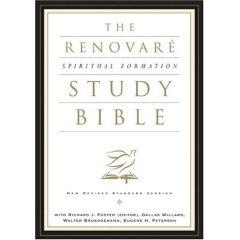
Dallas Willard and Richard Foster are two of my heroes (though I believe they would hate being called that!). Recently Willard and Foster along with Eugene Peterson and Walter Brueggeman teamed up to edit The Renovaré Spiritual Formation Bible. I'm usually not one for niche Bibles. But I don't think this Bible should be understood in that way. Here's a great quote by Dallas Willard from the first part of the interview which is here. Part two here.
What sometimes goes on in all sorts of Christian institutions is not formation of people in the character of Christ; it's teaching of outward conformity. You don't get in trouble for not having the character of Christ, but you do if you don't obey the laws.

It is so important to understand that character formation is not behavior modification. Lots of people misunderstand it and put it in the category of Alcoholics Anonymous. But in spiritual formation, we're not talking about behavior modification.

Better Together, an initiative of the Saguaro Seminar: Civic Engagement in America, Kennedy School of Government


This looks like an interesting website. I found it through a link in the Sojourners enewsletter which is a sermon by Yonce Shelton called "Still Bowling Alone?". The premise of the website is found in this quote:
The Saguaro Seminar issued the report Better Together, in December of 2000, calling for a nationwide campaign to redirect a downward spiral of civic apathy. Warning that the national stockpile of "social capital" --- our reserve of personal bonds and fellowship -- is seriously depleted, the report outlined the framework for sustained, broad-based social change to restore America's civic virtue.

I hope to explore this website more in the future. I think the collapse of American community is a fascinating subject. I would also say that it isn't just American community that has collapsed. My experience is that community in our churches has collapsed as well. How do we reestablish community in our churches which appears to currently be a counter cultural idea?

9.14.2005

Finding God in Odd Places : Interview with Donald Miller


Here's an interview with Donald Miller in Chrstianity Today. Miller is the author of Blue Like Jazz a book I reviewed earlier. The quote below is one of several that could be rather provacative.
I don't think about how we should do church. I love my church, and I love my pastor. But there's been a length of time where I did not feel like I fit in church culture in America. My theology is not run through the grid of self-help formulas. It's run through the grid of relational dynamics. There is a stark difference between the way the church in America is communicating faith and the way the Bible is communicating faith.

Does the church in America run it's theology through the grid of self-help formulas? Are we too focused on the results rather than the relationship? Is there "a stark difference between the way the church in America is communicating faith and the way the Bible is communicating faith"?

Impractical Christianity - Christianity Today Magazine


This is a great article and I encourage you to read it. For me, the quote below from this article articulates why so many in the emerging church discussion are appealing to me. They are honest, authentic, fellow strugglers trying to follow Jesus.
The way forward for Western and other imperfect Christians is the path of humility and brokenness. Of course, humility and brokenness don't sell very well from the pulpit, not to mention in our society. But that's irrelevant. What matters is that the Lord, in his sovereign ingenuity, wills to teach us trust and humble dependence by bringing us through hardship; trials represent the roundabout, yet only true way toward spiritual maturation. And the Lord includes among these hardships the spiritual turmoil suffered by forgiven sinners who become painfully aware they are far from the peak of holiness.

Are humility and honest confession characteristic of our churches? Not much of the time. Increasingly common is the self-assured, goal-oriented, achievement-driven, human-centered outlook. What would the evangelistic impact be if the popular profile of today's Christian emphasized sin and brokenness, if we just went public and admitted it: 'This is who we are, prone to wander, slow to learn, still in process, far from having 'arrived,' grateful for mercy ... so don't expect anything else.'

So what do you think? Are today's churches too goal driven and self-assured?

9.13.2005

Keepin' It Holy - Parenting and Sabbath keeping


Here's a good article on Sabbath keeping written for parents. The article prompts me to ask: are we doing a good job challenging ourselves and our families to be counter cultural in Sabbath observance? Don't get me wrong, I'm not for legalism. But we do need to teach ourselves and our children to rest and attend to God.
Sabbath, after all, is very counter-cultural. It's a godly way of challenging many false assumptions that govern our broader culture. As Dorothy Bass says, 'Sabbath-keeping forms habits of cultural resistance around pressure-points that are at the heart of our culture's distress: consumerism, time-famine, family fragmentation.' For Bass, 'decommericalizing the Sabbath is a key thing. I realized I needed to stop shopping on the Sabbath because shopping was one place where my own sin and the culture's need intersected. I was finding myself sitting in church thinking about getting a new piece of furniture rather than being properly attentive to God!'

9.12.2005

Hurricane Katrina


Hurricane Katrina (4 of 9)
Originally uploaded by hynesic.
Check out these amazing photos of hurricane Katrina's approach taken by Bob Dorosky.

9.09.2005

Interviews: Scott Derrickson - The Exorcism of Emily Rose


The Exorcism of Emily Rose opens today and the director, Scott Derrickson is a Christian. Here is an interview with him from Christianity Today. He has some very interesting and I suspect controversal opinions concerning the horror movie genre.
In my opinion, the horror genre is a perfect genre for Christians to be involved with. I think the more compelling question is, Why do so many Christians find it odd that a Christian would be working in this genre? To me, this genre deals more overtly with the supernatural than any other genre, it tackles issues of good and evil more than any other genre, it distinguishes and articulates the essence of good and evil better than any other genre, and my feeling is that a lot of Christians are wary of this genre simply because it's unpleasant. The genre is not about making you feel good, it is about making you face your fears. And in my experience, that's something that a lot of Christians don't want to do.

To me, the horror genre is the genre of non-denial. It's about admitting that there is evil in the world, and recognizing that there is evil within us, and that we're not in control, and that the things that we are afraid of must be confronted in order for us to relinquish that fear. And I think that the horror genre serves a great purpose in bolstering our understanding of what is evil and therefore better defining what is good. And of course I'm talking about, really, the potential of the horror genre, because there are a lot of horror films that don't do these things. It is a genre that's full of exploitation, but the better films in the genre certainly accomplish, I think, very noble things.

He has some profound points in this quote. But is it right? I know I was very offended by a preview for this movie, not because of the movie itself but because of the time of day it was shown (during prime time when many children are watching!).

So do you agree with Derrickson? Is the horror movie genre a good genre for Christians to be involved in?

Where Most See a Weather System, Some See Divine Retribution


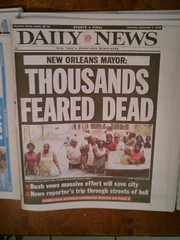
Thousands Feared Dead
Originally uploaded by villany.

'In my belief, God judged New Orleans for the sin of shedding innocent blood through abortion,' said Lefemine, who e-mailed the flesh-toned weather map to fellow activists across the country and put a stark message on the answering machine of his organization, Columbia Christians for Life.


Is Lefemine right? What are we to believe concerning the devastation left by Hurricane Katrina? The theodicy discussion surrounding Katrina is ramping up. Here are a few links.

Seeking Justice, of Gods or the Politicians
Katrina: Not God's Wrath--or His Will
Hard Path to Salvation

This section from Greg Boyd's response to the 9/11 attacks has always resonated with me. I think it is again apropriate to consider when wrestling with a Hurricane Katrina theodicy.

Jesus had a very different approach to atrocities like the one we have experienced. When a multitude of Galileans were murdered by Pilate, Jesus asked a crowd, “Do you think that because these Galileans suffered in this way they were worse sinners than all other Galileans?” He answered, “No, I tell you; but unless you repent, you will all perish as they did” (Luke 13:1–3). When a tower fell and killed eighteen people, Jesus asked, “do you think that they were worse offenders than all the others living in Jerusalem?” And again he answered, “No, I tell you; but unless you repent, you will all perish just as they did” (Luke 13:4–5). Jesus is saying that people should not try to discern the punishing hand of God in atrocities. They should rather concern themselves with their own relationship with the Father.

This attitude characterized all of Jesus’ ministries. He spent his ministry reaching out to people who were in different ways victims of a fallen, cursed world: the marginalized, the oppressed, the deaf, the mute, the blind, the deformed, the demonized. And Jesus never suggested that their affliction was punishment for sins they or someone else committed. Indeed, never once did Jesus suggest that their affliction in any way fit into a divine plan. On the contrary, Jesus assumed that their affliction was contrary to God’s will. Rather, Jesus expressed God’s will by coming against these afflictions. Indeed, often Jesus explicitly identified the ultimate source of their afflictions as being Satan or one of his demonic cohorts (e.g. Luke 11:14, 13:11–16; Mark 9:25; cf. Acts 10:38; 1 John 3:8).


So what do you think?

9.08.2005

HurricaneHousing.org - Hurricane Katrina Housing and Disaster Relief Help


My eyes teared up as I read several of the generous offers made by thousands of Americans to help house those devasted by the hurricane. I found this link in a Christianity Today article. Here you can read about how churches are helping the evacuees in Houston. And here, you can read about what Gulf churches were doing on the first Sunday after Katrina.

Christian Church (Disciples of Christ) Resolution 0518


Definiens of Love
Originally uploaded by bitterlysweet.


This is point 13 of resolution 0518 which passed at the Christian Church (Disciples of Christ) General Assembly:
We find further theological incentive for interreligious engagement through our belief that all people share a common humanity, that is, all are created imago dei, (Gen. 1:27) in God’s image and have been already profoundly reconciled to God and to others, including the creation, in Jesus Christ (2 Corinthians 5:18ff.; Colossians 3:15ff.). Every person embodies something of the divine image and therefore may possess some ray of truth, some aspect of the Mystery of God we know to be revealed in Jesus Christ. Even while we know God through Jesus Christ, we affirm that all human understanding of truth is inherently limited and conditioned. The reality of God, in contrast, is intrinsically unlimited. God will always be greater than any human can comprehend or any religion can convey. We affirm that it is morally, ethically, and spiritually wrong for any person, group, or religion to claim exclusive access to God, God’s love, grace, or salvation. When Christians and others have made such claims to exclusivity, much suffering and degradation has often been the result.

I find this to be a very problematic resolution by the Christian Church (DOC). It is nearly incomprehensible to me for a church to "affirm that it is morally, ethically, and spiritually wrong for any person, group, or religion to claim exclusive access to God, God's love, grace, or salvation." Though we must be careful with our claims of exclusive and that we aren't prideful or hurtful in our claims, I do believe the church can with confidence claim that "Jesus is the way, the truth, and the life. No one comes to the Father but by him." Jesus himself speaks of exclusion.

Ultimately, it's a matter of proclaiming truth. As I have read this resolution it is clear that the Christian Church (DOC) wishes to love others and do it well. But is not speaking the truth a loving action? If we fail to speak the truth are we acting in a rather hurtful, hateful manner?

We must be loving. We must speak the truth. We must speak the truth in love!

9.07.2005

Book Review: Blink by Malcolm Gladwell


First impressions, snap judgments, and intuition are the subject of Blink: The Power of Thinking Without Thinking. I found this to be a fascinating book. Anecdotes fill the pages as Gladwell relates story after story of the unconscious mind's ability to influence us without our conscious mind even knowing.

Especially powerful are his discussions concerning snap judgment in regards to race and gender. For a taste of the power of the unconscious mind try a computerized Implicit Association Test (IAT).

Particularly intriguing, especially from a Christian warfare worldview is this statement:
The results from these experiments are, obviously, quite disturbing. They suggest that what we think of as free will is largely an illusion: much of the time, we are simply operating on automatic pilot, and the way we think and act -- and how well we think and act on the spur of the moment -- are a lot more susceptible to outside influences than we realize.

I find this quote so intriguing from a warfare worldview because it begs the question of just how much unconscious influence over our daily actions the demonic and angelic realms have on us. What are your thoughts?

Last.fm

I have been using Audioscrobbler (now last.fm) to log the music played on my computer for quite a while now. Check it out as there has been a lot of nice developments.

Petty squabbles cause empty pews


IT ISN’T the big questions that stop people going to church — it is the little irritations, research has suggested.

Most churchgoers who abandon their weekly worship do so because they have had a dispute with a fellow member of the congregation.

A disagreement on a range of issues, from the way the organ is played to the content of the sermon, was the reason that nearly three quarters of respondents to a survey gave for why they felt people had left the Church.


This has been my experience in my churches. I have had numerous people tell me that they enjoy my preaching and enjoy the church but are currently in a conflict with someone at church and can't attend until things are worked out. Here's a question: how should pastors respond to such statements?

PreachingToday.com: Preaching Resources Workshops Library Topical Sermons Tools Outlines Lexicons


Here are some great thoughts on the use of imagination and preaching from Haddon Robinson:
The best sermons don't describe emotions; they create them. That requires your imagination.

Jesus told stories—secular, worldly stories—that changed his listeners' angle of vision. They were not 'Bible stories' as we think of them. He didn't read them out of a book. He made them up on the spot. He created them out of life. He used his imagination. Some hearers followed him; others wanted to murder him. But they got his point. If the sermon is for our hearers, then we must serve the hearers as our Teacher did. We must use our imaginations and help them use theirs.

So fire up that imagination for this Sunday!

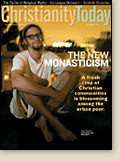
The New Monasticism - Christianity Today Magazine


'How can you worship a homeless Man on Sunday and ignore one on Monday?'


A powerful and challenging quote from a powerful and challenging article!

9.02.2005

Hurricane Katrina [Emergency Exit]

What a powerful image. Lord, have mercy!

LarkNews.com

The latest issue of LarkNews is up. Check out "a good source for Christian news." Also be sure to check out their new t-shirts!

'Chinese Christians used to sacrifice everything for Christ. Now they only want God to bless them,' says one Chinese elder who has served five prison terms for planting churches."

9.01.2005

Searching for the Living, but Mostly Finding the Dead - New York Times

'I made her leave for Ivan,' Ms. Burnett said of the storm last year that, it turned out, did not cause much damage here. 'She never forgave me.'

'She said, 'I'm not leaving, even if it's Category 10'; well, she's so damn stubborn,' Ms. Burnett said, beginning to cry.

Then Ms. Burnett saw a dog. 'Buddy, that's her dog,' she said. 'My mom's with the dog.'

The workers untangled a gently barking Buddy from some branches and then, when one spotted a body farther on, turned and signaled to another worker, who led Ms. Burnett off the roof and back to the rescue truck.

'Buddy, you're a miracle,' Ms. Burnett said to the dog, then turned to the worker, Debbie Crisher.

'She's in there, isn't she?'

'They're still looking,' Ms. Crisher said.

The search team turned over the body. It was that of Ms. Burnett's mother. They trudged back through power lines, trees and mud as heavy as wet concrete.

'Did you find her?' Ms. Burnett asked.

The squad leader, Jon Rigolo, took her aside and gave her the news. Ms. Burnett nodded and began crying again...

"The hardest part is, it didn't have to be this way," said David Cash, one of two doctors with the Virginia Beach team. "If people had evacuated - of course, where are they going to evacuate to? But other people did evacuate. Everybody that died here was needless. It's just the senselessness of it all."


Why are we so stubborn? Why are we so self-assured that we will survive, that these things will not happen to us? Lord, have mercy!

Superdome: Haven Quickly Becomes an Ordeal - New York Times

Once inside the dome, refugees were told that for their own safety they could not leave - the flood waters climbed four feet up the walls outside - and many likened the shelter to a prison.

Michael Childs, 45 and a housepainter, went a step further.

"It's worse than a prison," said Mr. Childs, who knew something about the subject, having spent three months in the Orleans Parish Prison on a drunken-driving charge. "In prison you have a place to urinate, a place for other bathroom needs. Here you get no water, no toilets, no lights. You get all that in prison."


Lord have mercy!

8.31.2005

High-Tech Circuit Riders


Seacoast is one of almost 1,000 U.S. churches to embrace a multisite approach, according to the Leadership Network (www.leadnet.org). Sometimes called a 'satellite' or 'franchise' model, going multisite is seen by advocates as one of the leading innovations of the 21st century and by critics as a sign that the church has sold out to consumerism—becoming just another big-box retailer, selling salvation with convenient hours and a discount price. The answer, as usual, lies somewhere in between.


Currently in the PCUSA there are about 17 models of how to do ministry without a full time seminary trained pastor. There are so many models because there are so many small rural PCUSA churches that can't afford a full-time minister. This is true for many small, rural churches. Could the multisite approach work in the rural church context?

Pros:
1. If the rural churches used a DVD the cost of the technology is relatively inexpensive (especially compared to hiring a full time seminary trained minister!).

2. Most people in a rural church have a lot of ownership in the church and would be able to facilitate the business of the church on a daily basis.

3. The church could hire a part-time pastor who is gifted in visitation and building relationships to meet the daily needs of the congregation.

4. The church would receive better teaching and worship than is common in your typical small rural church.

5. Partnering small rural churches with large mega-churches would open them up to the resources and opportunities that mega-churches provide.

6. Something similar worked once before in a rural setting: Methodist circuit riders
Roger Finke, a Penn State sociologist and coauthor of The Churching of America, 1776-1990: Winners and Losers in Our Religious Economy, sees a parallel between the multisite or franchise approach and the Methodist circuit riders of the 19th century.

"The Methodist circuit rider was basically the pastor for multiple satellite churches," Finke told CT. "They tried to start up satellite congregations as quickly and as cheaply as possible. When the circuit rider was not there during the week, the satellite had a class leader or layperson who kept things going. Then the circuit rider would come in every once in a while and fire people up."


Cons:
1. Would mainline churches (which dominate in the rural context) buy into this model of ministry and be willing to partner with evangelical churches currently using this model?

2. Would small town folks accept the video teaching as a replacement for a pastor?

3. Would the video teaching connect with rural people and their lives and issues? (Many illustrations that work in the city don't connect in the rural context because they describe events or places that don't exist in the rural context.)

4. Would it all feel too fake and phoney to rural people?

5. Would it all feel too distant, too coerographed, too professional for rural people?

6 Would it draw the unchurched in rural areas?

7. Is something lost in worship with videotaped preaching?

At the very least I'm tempted to give this a try next time I'm out of town. Maybe I could videotape a sermon and they could watch it when I'm gone. Then I could get feedback and see what people think.

Those are my thoughts. What do you think?

8.20.2005

Luther: The daily gift of new life - Christian History

'In the morning, as soon as you get out of bed, you are to make the sign of the holy cross and say: 'God the Father, Son, and Holy Spirit watch over me. Amen.' Further directions follow: say the Apostles Creed, pray the Lord's Prayer. … Then 'you are to go to your work joyfully.'


Good simple advice on a daily spiritual discipline from Luther.

What I did on my summer vacation...

Sorry for the long delay inbetween posts. We have been on vacation and also to my wife's grandfather's funeral. Lots of miles on the van. But we are finally home.

7.29.2005

TIME Magazine -- Reworking Work -- Jul. 25, 2005

The transition required a lot of deprogramming of old attitudes, and it produced a lot of pain. Some employees break down and cry in ROWE training sessions. 'People in the baby-boom generation realize what they gave up to get ahead in the workplace, and a lot of times it's their families. They realize that it doesn't have to be that way,' says Ressler, her eyes tearing up. In particular, men thank her and Thompson, who run the sessions, for giving them permission to spend more time with their families. 'They know now they can do it and not be judged,' says Thompson.

This article reminds me of a great talk I heard Andy Stanley give at a Youth Specialties National Youthworker Conference several years ago. Andy Stanley said something along these lines: "Tell me, who was the youth pastor at your church before you? Will there be a youth pastor at your church after you leave? Now tell me, who was your spouse's spouse before you? Who was your children's parent before you? Who will be their spouse or parent after you are gone? In ministry we ask God to take care of our families when we know we are robbing them of time, of us so we can accomplish the work of ministry, the work of God. Maybe we have this backwards. Shouldn't we be present and available to our families and trust God to get the work of His ministry done?"

Sounds like Best Buy is leading the way in helping people get their priorities straight! How can the church assist? How can the church meaningfully challenge the priorities of our culture?

Book Review: Blue Like Jazz by Don Miller


Let's get right to the point: I love this book! It is funny, insightful, powerful. Miller's honesty and authenticity are so refreshing. Run out and start reading it today if you haven't already!

Some of the highlights include Miller's thoughts on attending Reed College, attending a Unitarian church in Colorado Springs, living as a fundamentalist Christian for a summer, and wrestling with how to love others.

I feel that it is probably the best book for handing seeks who want to learn more about Christian spirituality but aren't interested in the church. There are so many folks in my life that I want to give this book to!

Here's a great quote for the church to keep in mind:

"A friend of mine, a young pastor who recently started a church, talks to me from time to time about the new face of church in America--about the postmodern church. He says the new church will be different from the old one, that we will be relevant to culture and the human struggle. I don't think any church has ever been relevant to culture, to the human struggle, unless it believed in Jesus and the power of His gospel. If the supposed new church believes in trendy music and cool Web pages, then it is not relevant to culture either. It is just another tool of Satan to get people to be passionate about nothing." (p. 111)

I think this quote resonates so much with me because it's true. I know it to be true through my experience. Churches out in the sticks struggle with being relevant. Actually most of the time we don't even struggle! We just aren't relevant. We don't play all the latest greatest music. We sing hymns with an organ. Sometimes we sing some "newer" praise songs like "Lord I Lift Your Name On High" and "Shine, Jesus, Shine" but we sing them with organ accompaniment! We don't have a website. We don't market ourselves. We are far from relevant to the culture.

Yet people come. Young and old. And they are growing. Many tell me they are growing more than ever before in their lives! Why? Because I believe in Jesus and the power of His gospel. What could be more relevant than that?

7.28.2005

spamgourmet - free disposable email addresses, spam blocker

This looks like a great tool. I have been using Mailblocks for several years but have wanted a spamblocker for my gmail account. Enter spamgourmet! Depending on how well it works, I may not have to renew my Mailblocks subscription this year.

7.21.2005

Google Maps - 115 Federal Street Pittsburgh, PA 15212


Where are the Colorado Rockies playing tonight? PNC Park. I love baseball and Google maps with the satellite feature makes it really fun to explore all the great ball parks!

Speaking of Faith | The Religious Roots of American Democracy | Krista's Reflection

If you get a chance to hear this program, it sounds like it will be excellent and timely. From this brief quote, it is interesting how the founding father's defined terms like happiness and how most Americans today define it.

A few years ago I came across this fascinating observation by the Frenchman Alexis de Tocqueville from his famous report of 1831, Democracy in America:

"Religion in America takes no direct part in the government of society, but it must be regarded as the first of their political institutions. I do not know whether all Americans have a sincere faith and religion, for who can search the human heart? But I am certain that they hold it to be indispensable to the maintenance of republican institutions. This opinion is not peculiar to a class of citizens or to a party, but it belongs to the whole nation and to every rank of society."

These days, there is a new discussion building in our culture — in both public and private spaces — about the role of religion in American life. As we began to prepare this program on the religious roots in American democracy, I wanted to probe something de Tocqueville saw that I find underrepresented in our contemporary dynamics: a religious sensibility in the origins of our national ideals that goes deeper than our modern debates, and transcends them.

I found a modern de Tocqueville in philosopher Jacob Needleman, and our conversation felt like an adventure. Needleman spent several years tracing the spiritual and intellectual content of the American founders' thought. Spirit and intellect, he says, always worked in concert in the formulation of American democracy and the writing of the documents that define American identity even today. Rights implied duties. Happiness was an inalienable right, but it was not synonymous with pleasure, with having or acquiring what one wants. It meant "well-being." It was linked with conscience. In the "idea of America," Needleman asserts provocatively, democracy is not just a set of laws and societal structures. It is also inner work.

Needleman enlarges the notion of America's founders to include important thinkers who helped form the virtues of our republic beyond revolution and constitution. So in this week's program, alongside Thomas Jefferson and Thomas Paine, we have wonderful readings from Frederick Douglass and Walt Whitman. In the context of conversation with Needleman, I heard what each of them had to say with new interest and insight. I came away feeling that we can invoke the religious sensibility of the founders precisely as an antidote to the confusion and excesses of religion in American life today.


This serves to illustrate the need for careful hermenuetics. Whenever we are dealing with an historical text, we must seek to understand what the authors original intent was. We must define the words the way the authors did.

Perhaps we rely too much on reader response today.

The Matching Game update

Several days ago I posted the Matching Game quiz challenging players to match the church with the statement of faith. Here are the results. The correct answer was Willow Creek.


The Matching Game : Match the church with the statement of faith!
This statement of faith belongs to:
Willow Creek Community Church - Bill Hybels
3
Cedar Ridge Community Church - Brian McLaren
1
Saddleback Church - Rick Warren
2
Lakewood Church - Joel Olsteen
2
Thomas Road Baptist Church - Jerry Falwell
3
New Life Church - Ted Haggard
0
The Potter's House - T.D. Jakes
2
This Poll by hawkenstein
Click here to view current results

7.15.2005

The Constructive Curmudgeon

Dr. Groothuis from Denver Seminary is now blogging atThe Constructive Curmudgeon.

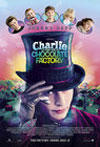
Reviews: Charlie and the Chocolate Factory - Christianity Today Movies


Charlie and the Chocolate Factory opens today. Here's part of a review from Christianity Today:
...it intrigued me to hear the new version of Dahl's book would be directed by Tim Burton and star Johnny Depp, two guys with a bit of a resumé in creepy, trippy, and weird. And so, I viewed Burton and Depp as the two biggest wild cards in whether this movie would be any good.

It turns out that the duo has each succeeded in creating a fable that is not creepy or trippy, but just possessing a gentle weirdness (just wait for the scene with the 'Small World' attraction) that is completely appropriate to Dahl's original book. In fact, Charlie and the Chocolate Factory is a charming, engrossing, and often laugh-out-loud funny fairy tale that captures the book's spirit while still marking its own territory.

Will it be a hit?

Out of Africa - Christianity Today Magazine


The power is shifting. The moral authority is shifting. This is a great article discussing the shift of power and authority in the church.
Philip Jenkins, in his groundbreaking The Next Christendom, wrote that a 'global perspective should make us think carefully before asserting 'what Christians believe' or 'how the church is changing.' All too often [such statements] refer only to what that ever-shrinking remnant of Western Christians and Catholics believe. Such assertions are outrageous today. … The era of Western Christianity has passed within our lifetimes, and the day of Southern Christianity is dawning.'

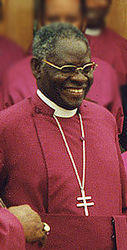
In the Anglican Communion, the third-largest Christian body in the world with more than 70 million adherents, there is no better representative of that shift than Nigerian Archbishop Peter Jasper Akinola.