3.07.2006

Conservatives and liberals : Living with tares


The Christian Church (Disciples of Christ) that I pastor, is struggling with the issue of "living with tares." We are a conservative church in the midst of a liberal denomination. What do we do? I found this article insightful. Here's a quote:

Living with Tares - Christianity Today Magazine
Why do I not join those who have left or are leaving? Why do I stay? Serving a broken and divided church is a hard calling, and I do not minimize the difficulty of the task or the inevitable disappointments that I will encounter on the journey. But the Lord, for his good purpose, has (I humbly believe) thrown into one church Christians of radically different and sometimes theologically incompatible perspectives. Is it possible that in the midst of this painful discontinuity, he may do a work that none of us can foresee? It is in that hope and in remembering that he is Lord of the church and in charge of the big picture that I follow Jesus in the Episcopal Church.

So what do you think? Should conservative, evangelical churches and pastor's stay in liberal denominations?

3.02.2006

Wray's close call


I haven't blogged in a long time. I'm really enjoying my silence. I have been reading a lot of great books and praying about my future and the future's of the churches I serve. I have become rather self-conscious about my blog and what I have written, mostly because of the possible pending search and call process. How will my blog effect that process? My brother thinks I should delete it. I 'm most concerned about my thoughts being taken out of context by others. Oh well, I'm probably over-analysizing!

So what has prompted this post? This local story and some photos I took. I couldn't resist.

Rocky Mountain News: Local
Yuma County Sheriff Sam McCoy said arching power lines caused by high winds yesterday may have sparked a 23,000-acre prairie fire that injured four firefighters and burned at least seven buildings.


2.01.2006

Power, Possessions and Stewards

These are challenging words from Andy Crouch concerning possessions and power.

Learning from Fools - Christianity Today Magazine
Possessions and power are instruments of blindness. They endanger our very souls. The only safe thing to do with them is to forsake them, to put them beyond use, beyond the reach of our foolish dreams.

1.13.2006

Rich aliens: possessions and God's Kingdom


This is a very interesting article on the relationship of church and culture. Listen to these challenging words:
Too often, of course, the contemporary church simply mirrors the culture. Increasingly, we are less a holy city drawn together around Christ and more a part of the suburban sprawl that celebrates individual autonomy, choice, entertainment, and pragmatic efficiency.

Sadly, I feel this statement is true. This morning I finished the excellent book God & Your Stuff: The Vital Link Between Your Possessions and Your Soul. In this book, the author Wesley Willmer, argues that the use of our possessions is our trademark as Christians and a test as stewards. Willmer argues that "if Christ is not first in the use of our money, he is not first in our lives." Jesus said it this way, "where your treasure is, there your heart is also." By this challenging standard, no wonder the church mirrors culture typically just creating a christianized subculture of the larger culture. Sadly, most in the Christians in the church mirror cultural attitudes toward money and possessions. Few Christians call into question our materialistic lifestyles.

And it is in large part the clergy's fault! Pastors have not been trained in a theology of stewardship and therefore are not training the church. My seminary education did not include a mandatory class on stewardship. And the church I grew up in tended to preach the subject when it was necessary.

This year I am planning on preaching on stewardship once a quarter. It will not be a desperate appeal for funds. It will be an invitation to discover the powerful spiritual discipline of giving. And hopefully, slowly but surely, the folks in my church and their pastor will begin shattering the mirrors of culture in our lives.


Technorati Tags: , ,

1.09.2006

The last bag of tortilla chips in town...


There are some unique experiences to living out in the sticks. Last night I had a particularly funny one.

At about 5pm, my wife asked me to go to the grocery store for a few items: tortilla chips, bananas, cheese, and a lime. The plan was to have nachos for dinner. All was going well until I turned down the chip aisle. I wish I had my camera with me. There were very few bags of chips left and not a single bag of tortilla chips.

"No problem," I thought, "I just go to Alco next door."

There were no tortilla chips at Alco. "I'll check Ampride," I thought.

After waiting at the train crossing for the train to pass, I entered Ampride. No tortilla chips! The last possible store is 7-Eleven.

There at 7-Eleven was one bag of Tostitos bite size tortilla chips! Dinner was saved!

Just another day living out in the sticks!

1.06.2006

Commercialization, Aslan, Hobbes, and the Church


This is a fantastic article, dealing with commercialization and Narnia. It is utterly amazing to me how the church is seen as an opportunity to make a buck selling worthless books and tons of unecessary knicknacks!

A Tale of Two Kitties - Christianity Today Magazine
In an age in which any notable spiritual movement immediately begets a plethora of associated products (calendars, Bible covers, journals, T-shirts), the logic and form of commercialism demand our critical attention, not merely our easy acceptance. When does the logic of commercialism not make sense? When is it a problem to turn certain ideas or realities into merchandise? When is defying popularity and consumer demand an act of integrity? When should form outweigh marketability? When should a lion remain bookish, and a tiger remain cartoonish?

Great questions for us to consider (even though I really liked the movie!).

Technorati Tags: , , ,

Pat speaks, God listens!


Pat strikes again! Yesterday, Robertson suggested that Sharon's stroke is God's judgment. This guy is truly unbelievable!

``God considers this land to be his,'' Robertson said on his TV program ``The 700 Club.'' ``You read the Bible and he says `This is my land,' and for any prime minister of Israel who decides he is going to carve it up and give it away, God says, `No, this is mine.'''

Sharon, who ordered Israel's withdrawal from Gaza last year, suffered a severe stroke on Wednesday.

In Robertson's broadcast from his Christian Broadcasting Network in Virginia Beach, the evangelist said he had personally prayed about a year ago with Sharon, whom he called ``a very tender-hearted man and a good friend.'' He said he was sad to see Sharon in this condition.

He also said, however, that in the Bible, the prophet Joel ``makes it very clear that God has enmity against those who 'divide my land.'''

Sharon ``was dividing God's land and I would say woe unto any prime minister of Israel who takes a similar course to appease the EU (European Union), the United Nations, or the United States of America,'' Robertson said.

Technorati Tags: ,

1.04.2006

Finding True North


This is a great article. I have felt much of what the author feels. Many times serving small churches (especially after serving in large even mega churches) is difficult especially when it comes to comparing what you are doing with others. But I know God has called me here.

Yet I do not know for how long. In September 2005, the session of the Presbyterian Church I serve voted to end the yoke relationship with the Christian Church (Disciples of Christ). This decision is effective when I leave. Yet both churches are not in a hurry to see me leave. Kind of a crazy situation.

This is why this article is so great. Especially powerful are these thoughts:
As appealing as the church may have been, we had not been given the liberty to leave. I chose to remain at my post.

I had several other opportunities to change churches. Most of them seemed like "better" opportunities—larger congregations, more staff, nicer locale. Some were opportunities I had solicited.

In most cases the thing that kept me from accepting a call, even when I wanted to say "yes," was the lack of a personal sense of release. Yes, this is subjective. But I did not feel that I could go until I sensed that the Holy Spirit had said, "You are dismissed."

So that's where I am. Praying, waiting, seeking God, asking, "Am I dismissed?"

12.29.2005

No Church? No Problem


Sorry I've been gone so long. I think I burned out on the whole blogging thing and needed some time away. I am seeking to bring more balance in to many areas of my life. We'll see how it goes.

Here's an interesting quote from an article at Christianity Today called No Church? No Problem.
Unlike the Great Awakenings, which brought people into the church, this new movement "entails drawing people away from reliance upon a local church into a deeper connection with and reliance upon God." Already "millions of believers have stopped going to church," so Barna expects that in 20 years "only about one-third of the population will rely upon a local congregation as the primary or exclusive means for experiencing and expressing their faith." Down will go the number of churches, donations to churches, and the cultural influence of churches.

This doesn't sound too good for job security for pastors! But I hope it spells great things for the advancement of God's Kingdom. What are your thoughts about this trend?
Filed in: ,

12.08.2005

More Problems with Evangelical Theology


This is an interesting article by Chuck Colson. He speaks of the weakness in evangelical theology to deal with suffering. I agree. I believe most evangelical theology doesn't even have a theology of suffering. It has plenty of answer for suffering but it provides us with very little on how to suffer. As Colson says,
I'm not sure how well the contemporary evangelical world prepares us for this struggle, which I suspect many evangelicals experience but fear to admit because of the expectations we create. At such times, we can turn for strength to older and richer theological traditions probably unfamiliar to many—writings by saints who endured agonies both physical and spiritual.

I've got to get this quote from Colson in as well:
Evangelicals must rely on more than cheerful tunes, easy answers, and happy smiles. We must dig deeply into the church's treasures to find what it is like to worship God, not because of our circumstances, but in spite of them.

What are your thoughts? Have you struggled or suffered and found your theology wanting?

Filed in: ,

12.05.2005

Ben Witherington on The Problem with Evangelical Theology


Recently I wrote about Ben Witherington's new book The Problem with Evangelical Theology. Thanks to D.P. here's a quote from Ben Witherington's blog concerning his book and what he hopes will be achieved by it:
It is my hope that this book which I have written will stir up a lot of discussion, not defensiveness or furor. I think in the 21rst century we need to learn to do our theology in a more Biblical way, not just use the Bible as a justification or proof text for the theology we want to do anyway. If we manage to do this then perhaps those two reformation principles will come alive again-- in reforming ourselves, we may become more Biblical persons, thinkers theologians, ethicists. And this would be an exceedingly good thing. The time for posturing, pretending, and polemics should be over.


So how can we do theology in a more biblical way? What would it mean to be more biblical in our theology?

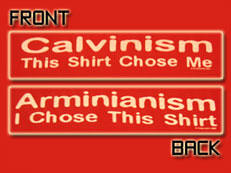
Just for fun: the graphic above comes from a shirt.

Filed in: , ,

12.01.2005

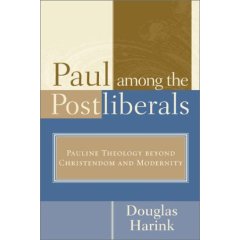
Reading reflections - Paul Among the Postliberals


A friend and I are currently reading this book. Here's an interesting quote from the end of chapter 1:

That message and missions [Paul's mission to the nations] is precisely about God's deliverance of the Gentiles from their former religious-sociopolitical allegiances, in order that they might give their unreserved loyalty (pistis) to the one God of Israel who has invaded their world in Jesus Christ and the power of the Holy Spirit, in order that they might become a new people, under a new Lord and a new regime called the kingdom of God, the body of Christ, the ekklesia. That is justification. The Gentiles share in this new people and new regime by being baptized into the body of Christ and, in their newfound freedom from other gods and other lords, by becoming obedient and faithful to their Lord, repeating the pattern of his obedience and faithfulness in their whole way of life, in body and in soul, social and personal, active and passive, economic and political, within the body of Christ and as the body of Christ. That is faith. Their justification, therefore, is or ought to be immediately marked by a specific and visible way of being and living in the world as a social body. Every letter of Paul is oriented to that end; one searches in vain for any section within those letters that is not oriented to it. (emphasis is original)


At the core of this book and the first chapter is the discussion of the "rendering of the Greek phrase pistis Christou Iesou (Gal. 2:16 and its variants elsewhere)." Is this phrase to be understood as faith in or toward Jesus Christ with Jesus Christ as the object of the faith thus translating the phrase "faith in Jesus Christ" or is it a subjective genitive thus translating the phrase "the faith(fulness) of Christ."

I'd love to hear your thoughts on this issue and especially on the quote concerning faith and justification. Are those definitions that you can live with? How do you understand pistis Christou Iesou? Why do you understand it the way you do?

Filed in: , , , ,

11.30.2005

Catholic AnalysisCatholic Analysis: Full Text of New Document on Priesthood


The Catholic Church is getting a lot of press on the newly released Document on Priesthood. Here is an excerpt containing the most controversial portion:
(20) The spiritual director has the obligation to evaluate all the qualities of the candidate's personality and to make sure that he does not present disturbances of a sexual nature, which are incompatible with the priesthood. If a candidate practices homosexuality or presents deep-seated homosexual tendencies, his spiritual director, as well as his confessor, have the duty to dissuade him in conscience from proceeding toward ordination. It goes without saying that the candidate himself has the primary responsibility for his own formation.(21) He must offer himself trustingly to the discernment of the Church, of the bishop who calls him to orders, of the rector of the seminary, of his spiritual director and of the other seminary educators to whom the bishop or major superior has entrusted the task of forming future priests. It would be gravely dishonest for a candidate to hide his own homosexuality in order to proceed, despite everything, toward ordination. Such a deceitful attitude does not correspond to the spirit of truth, loyalty and openness that must characterize the personality of him who believes he is called to serve Christ and his Church in the ministerial priesthood.

So here's an interesting question. If, for the purposes of this discussion, some people are predisposed genetically to homosexuality, but they vow to be celibate as a priest, and indeed they truly remain celibate, then should they be banned from ordination and serving as a priest? Is this fundamentally different from a celibate heterosexual being ordained and serving as a priest?

Another intriguing way of wording this question is this: If some people are genetically predisposed to homosexuality, then would God call these people to serve as celibate priests?

What do you think? I can see arguments for both sides.

Filed in: , , , ,

11.29.2005

C.S. Lewis and the consolation of religion


From the Writer's Almanac for November 29, 2005:
It's the birthday of C. S. (Clive Staples) Lewis, born in Belfast, Ireland, (1898), the author of the children's series about the land of Narnia. He also wrote The Screwtape Letters (1941), in which he wrote, "The safest road to Hell is the gradual one—the gentle slope, soft underfoot, without sudden turnings, without milestones, without signposts." He was a confident Oxford philosopher, not at all prepared to find himself a Christian convert. To his friend Owen Barfield he wrote: "Terrible things have happened to me. The 'Spirit' or 'Real I' is showing an alarming tendency to becoming much more personal and is taking the offensive, and behaving just like God. You'd better come on Monday at the latest or I may have entered a monastery." He said, "Talk to me about the truth of religion and I'll listen gladly. Talk to me about the duty of religion and I'll listen submissively. But don't come talking to me about the consolations of religion or I shall suspect that you don't understand."

This is rather timely as the release of Narnia is a little over a week away. I love Lewis' quote on "the consolations of religion."

In our town, we buried 70 people this year. That may not sound like a lot until you know that our town has a population of only 2200! We lost 3% of the town's population by death this year!

And talking about the consolations of religion does very little for deeply grieving people. In fact, I've seen it do much more harm than good. Sometimes words seem so shallow when the pain is so deep!

As a pastor, I find that I often need to give people permission to be angry, to question, to allow themselves to hurt. Sometimes I have to help kick start the grieving process and give them permission to keep it going as long as they need. Many of my pastoral visits following the funeral are sitting with someone, holding their hand, allowing them to weep, and weeping with them. I believe one of the greatest "consolations of religion" as Lewis puts it, is presence. "The Word became flesh and blood, and moved into the neighborhood" (John 1:14, The Message).

More and more, I am convinced that in our ruggedly individualistic, independent, disconnected and fractured society, becoming flesh and blood, and moving into the neighborhood is one of the greatest challenges and opportunities for the Church today.

So how do we move into the neighborhood? And if we do it well, what price is there to pay? What will we sacrifice to make it happen?
Filed in: , ,

11.28.2005

Messy Scriptures - The Story of the Sacred Scroll


Here’s a quote from Dr. Jim Dixon, senior pastor of Cherry Hills Community Church in a message he delivered entitled “The Story of the Sacred Scroll.” This quote comes in the context of discussing biblical infallibility and inerrancy:

But you see, there is a problem with these words. A problem with the word infallible, a problem with the word inerrant. And the problem is these words are not found in the Bible. The Bible doesn’t use these words to describe itself. Now the concepts behind these words may be found in the Bible, depending on how you define those concepts, but you see the Bible doesn’t include those words.

And there’s a deeper problem. The deeper problem is that the words inerrancy and infallibility, they tend to kind of give you a static view of the Bible. And the Bible proclaims of itself it is not static it is dynamic, it is active, it is alive. I mean this is not some kind of a carcass you can perform an autopsy on. The Bible is living and active.

Of course the word the Bible uses to define itself with regard to its authority is inspiration. All Scripture is inspired of God. But the Greek word, the Greek word is theopneustos which literally means God-breathed. That’s what the Bible says of itself, all Scripture is God-breathed. The breath of God is on this book.


His discussion of these doctrines really resonates with me!

So what do you think? Do you agree that there is a problem with these words, with these concepts? Do these concepts cause us to see the Bible as static rather than dynamic?
Filed in: , , ,

11.24.2005

The Underrated Spiritual Secret


Before we eat turkey and watch the Broncos beat the Cowboys, take some time to read this great article on the spiritual discipline of being grateful. Here's a quote to whet your appetite:
Developing the meditative habit of constantly whispering thanks to him—no matter the situation—is, in fact, a mustard seed of life-changing power. Radical, for it goes to the root of who we are. Small, seemingly insignificant, yet it has the power to change our lives and blow our socks off, right in the midst of the everyday. When we really give God thanks in everything, we are acknowledging that he is sovereign and that we trust him. And we find that it changes us.

Go Broncos!
Filed in: ,

11.23.2005

Theological distinctives poll

Since we are having such a great discussion concerning theological distinctives (and tomorrow's Thanksgiving and I may not be able to update the blog for a few days!) I thought we'd try a little poll.


Theological distinctives
As to theological distinctives, I fall most in this stream...
Traditional Roman Catholic
Lutheran
Anabaptist
Reformed
Arminian
Wesleyan
Pentecostal
Neo-orthodox
Liberal
This Poll by hawkenstein
Click here to view results

Filed in: ,

Redeeming Harry Potter


Harry Potter. For some in the Christian community them's fightin' words! Here's an interesting article and a quote to grab your attention:
I was recently interviewed on live radio about current movies, and when asked which I was looking forward to the most, I rattled off a few of my obvious choices—including Harry Potter and the Goblet of Fire, which opens this week.

"Uh oh," said the host half-jokingly, "you've just lost half our audience." I was then asked to justify how a Christian could possibly accept and endorse a series of books and films that promotes the occult. Looking back on my fumbled response, I can't help but think of that verse in 1 Peter about being prepared to give an answer to anyone who asks.

Harry Potter remains a hot potato, polarizing Christians left and right because of three words: wizards, witches, and magic. Deuteronomy 18:10-11 warns us to avoid engaging in pagan rituals and sorcery, and for sure, Christianity and witchcraft don't mix.

So what's your opinion of Harry Potter? Can Christians and Harry Potter get along?
Filed in: ,

11.22.2005

Megachurch Google sightseeing: Pulpit Rock Church


I grew up at a megachurch in Denver called Cherry Hills Community Church. I also served there as the junior high youth pastor for awhile. Now I serve two small churches that between the two average 150 in attendance. I arrived here three years ago and both churches have experienced growth. But in a town of 2000, we can only expect to grow so much. We actually have nearly 10% of the town's population attending one of our two churches. How many churches can make that claim!

In these small churches I am often amazed at the scarcity mentality. Much of the time, the leadership is just trying to survive. It's frustrating because it can keep us from risking, moving out in faith.

But a scarcity mentality also characterizes many large and megachurches. It seems to me, that it's just human nature. To think about what we don't have or can't do comes easily to us.

Earlier this year, when Google first released Googlemaps, I started posting megachurch Google sightseeing posts just for fun. There's not really a purpose to them. But it does allow me to visit many megachurch websites and get a feel for them. It also shows me just how many resources the kingdom of God has (though this is obviously just the tip of the iceberg!) Here's the vision and mission for Pulpit Rock Church.
Our Vision
To see lives transformed as we influence our world out of our intimacy with God.

At Pulpit Rock Church we want to see lives transformed by the power of God. In order for that to happen we know that our influence on our world must grow out of an intimate relationship with God.

Our Mission
To passionately pursue God, extend the hands and heart of Christ, build biblical community, and establish a legacy of faith.

To the extent we do these things, we are confident the Spirit of God will transform our lives and transform our community for His glory.

I remember spending staff retreats hammering out vision and mission statements. It was a good exercise but it always looked better on paper. On paper we could say we were going to do or be about anything we wanted to. But to actually achieve those things in the vast majority of the thousands that came on any given Sunday? That is quite another thing.

My two little churches don't have a written vision or mission statement. Do you think churches need one? It seems the more statements like these I read, the more they sound the same. What's the value of a vision and mission statement for a church?

Filed in: ,

11.21.2005

Expletive Undeleted 2: The F-bomb Fallout


I earlier blogged about part 1 of Expletive Undeleted. Here's part 2. The quote tells you what Mike Sares, the pastor of Scum of the Earth decided to do:
Before Makkai stood up to read, Sares thought it best to issue a disclaimer. “I told the congregation that the next piece was R-rated,” Sares recalls.

Read the rest and tell me what do you think? Did he make the right decision?Filed in: , ,